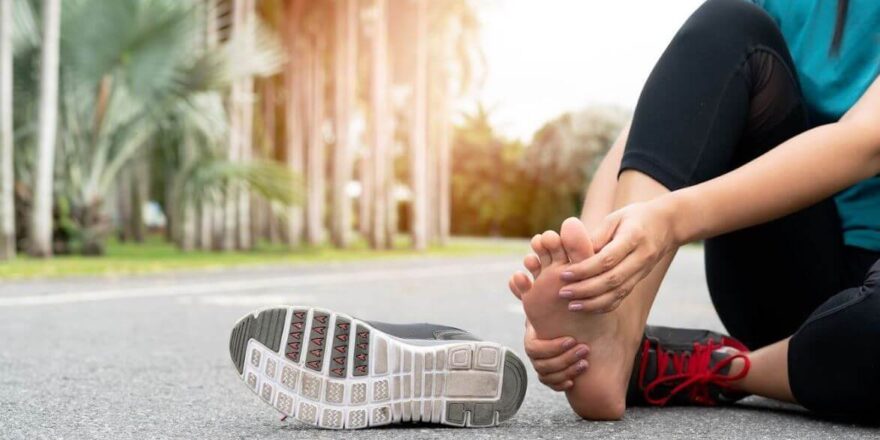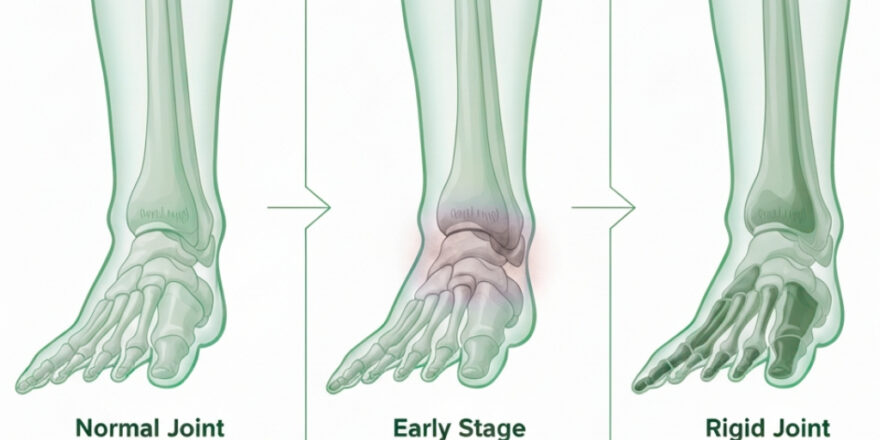
For patients living with Hallux Rigidus, every step can feel like a mechanical collision. This condition causes the big toe joint to stiffen. In response, the body often grows dorsal osteophytes on top of the joint. These spurs make standard shoes feel like a restrictive vise.
In 2026, the goal of footwear is “MTP Decompression”. You need a shoe that provides more than just horizontal width. You need vertical depth to clear bone spurs and rocker-sole mechanics to limit joint bending. This guide features the 11 best options for managing pain through specialized width (2E–10E) and rigid support
| Product Image | Shoe Model & Width Code | Core Clinical Benefit & Description | Best Used For | Footwear Access |
|---|---|---|---|---|
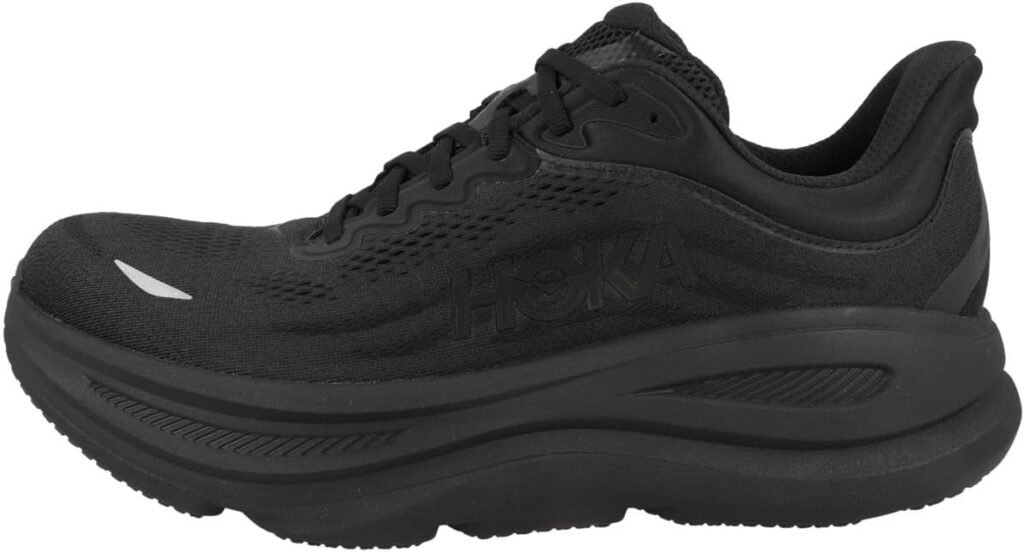
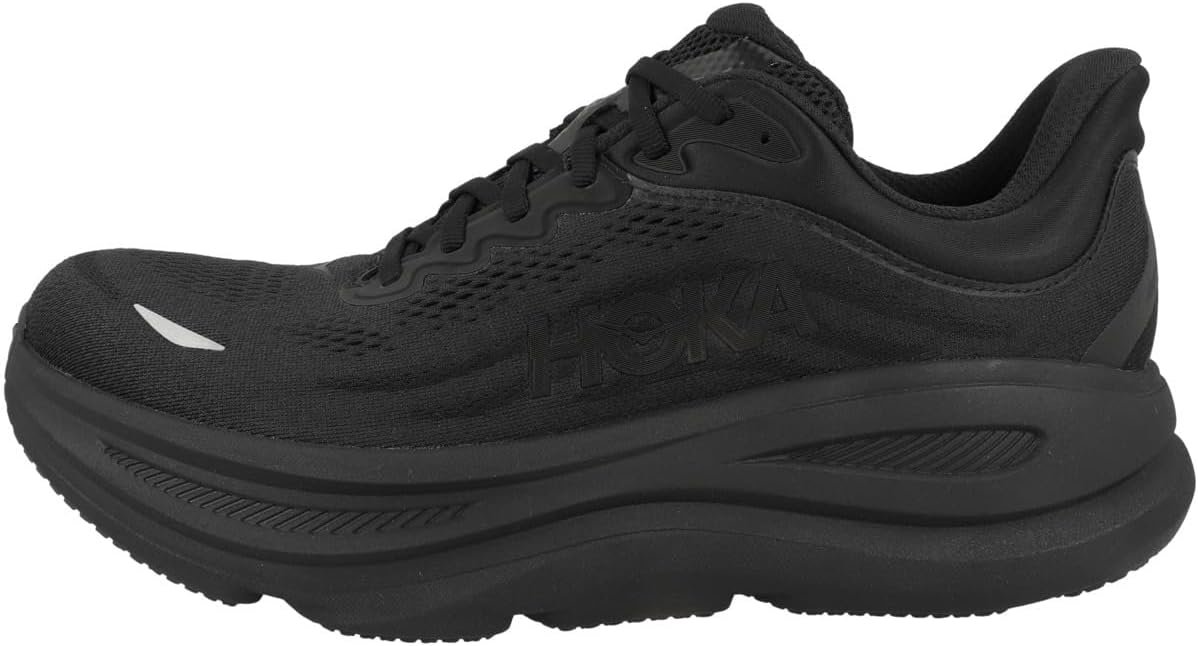 | Hoka Bondi 9 (D, 2E) | 33mm Max-Cushion Meta-Rocker: Rolls the foot smoothly to reduce big toe flexion by over 50%. | Grade 2-3 Stiffness & Max Joint Offloading | Check Price |
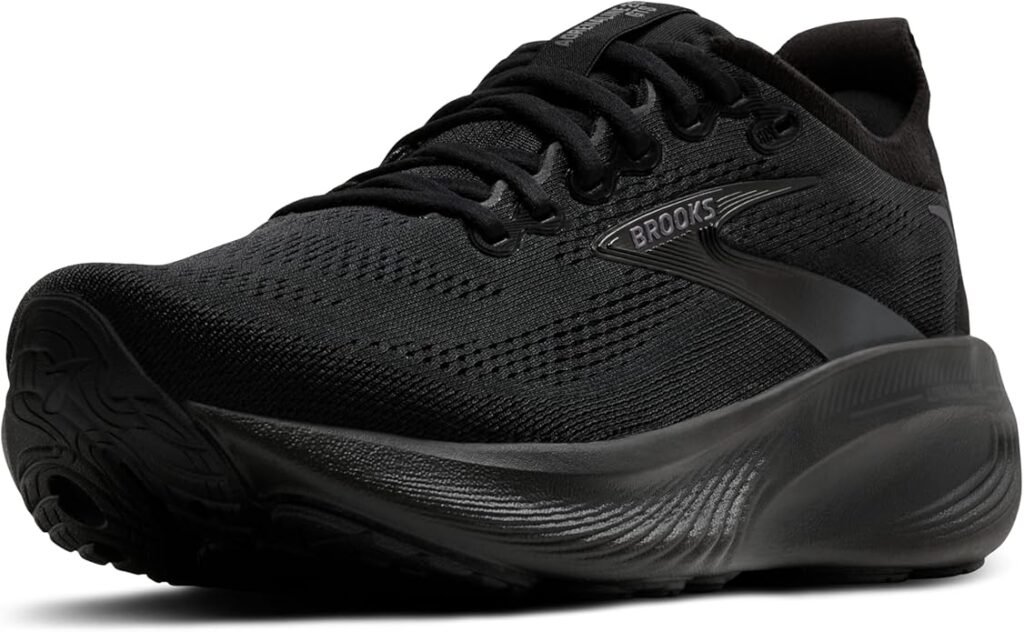
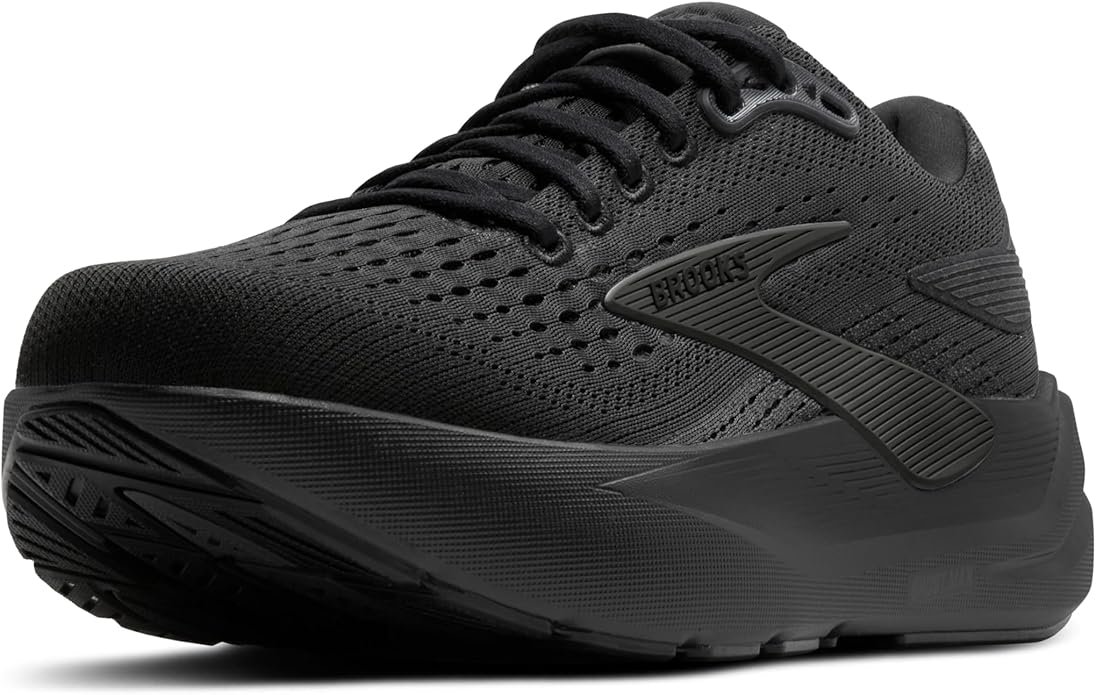 | Brooks Ghost Max 3 (D, 2E, 4E) | High-Volume Linear Last: Roomy midfoot with a highly stretchable engineered mesh upper. | Sensitive Dorsal Bone Spurs | Check Price |
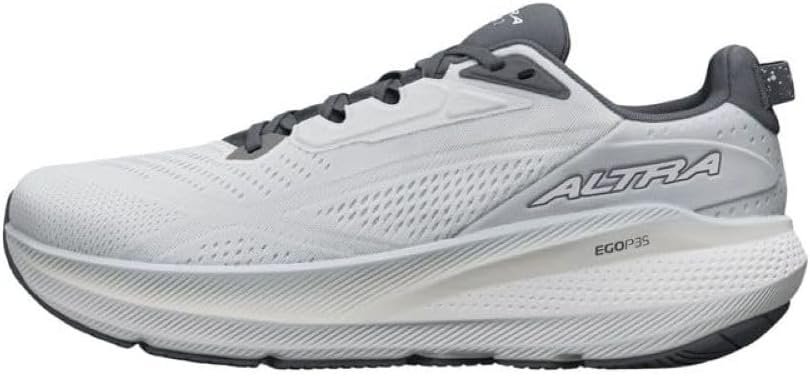 | Altra FWD VIA 2 (Standard Wide) | FootShape™ Toe Box: Anatomical front profile keeps the big toe straight to eliminate lateral friction. | Grade 1 Joint Stiffness & Natural Toe Splay | Check Price |
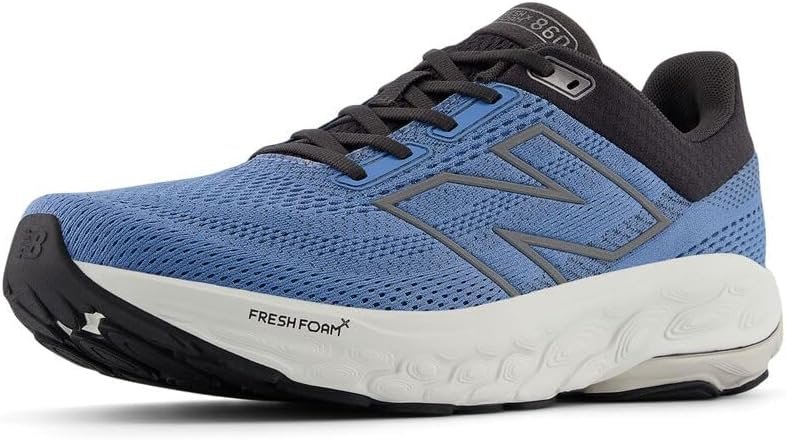 | New Balance 860v14 (2E, 4E) | Stability Plane Technology: Dual-density medial posting stops internal arch collapse. | Overpronators & Flat-Footed Patients | Check Price |
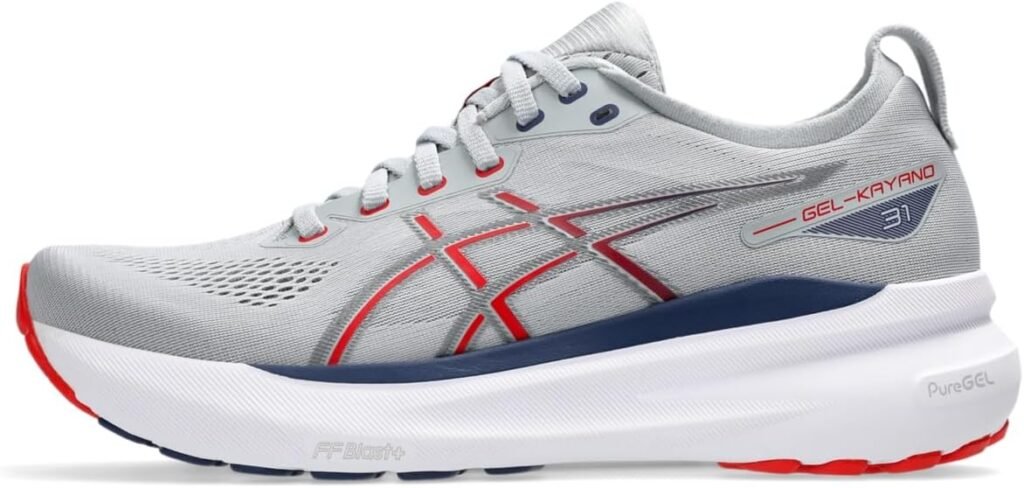
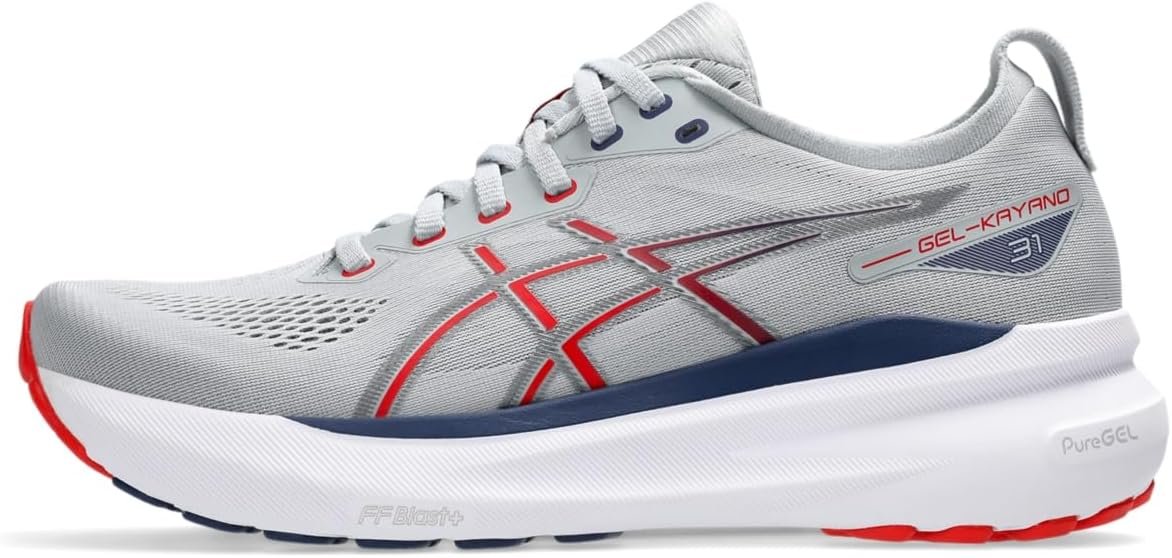 | ASICS Gel-Kayano 31/32 (D, 2E) | 4D Guidance System: Delivers adaptive structural control to shield the kinetic chain. | High-Mileage Walkers Needing Support | Check Price |
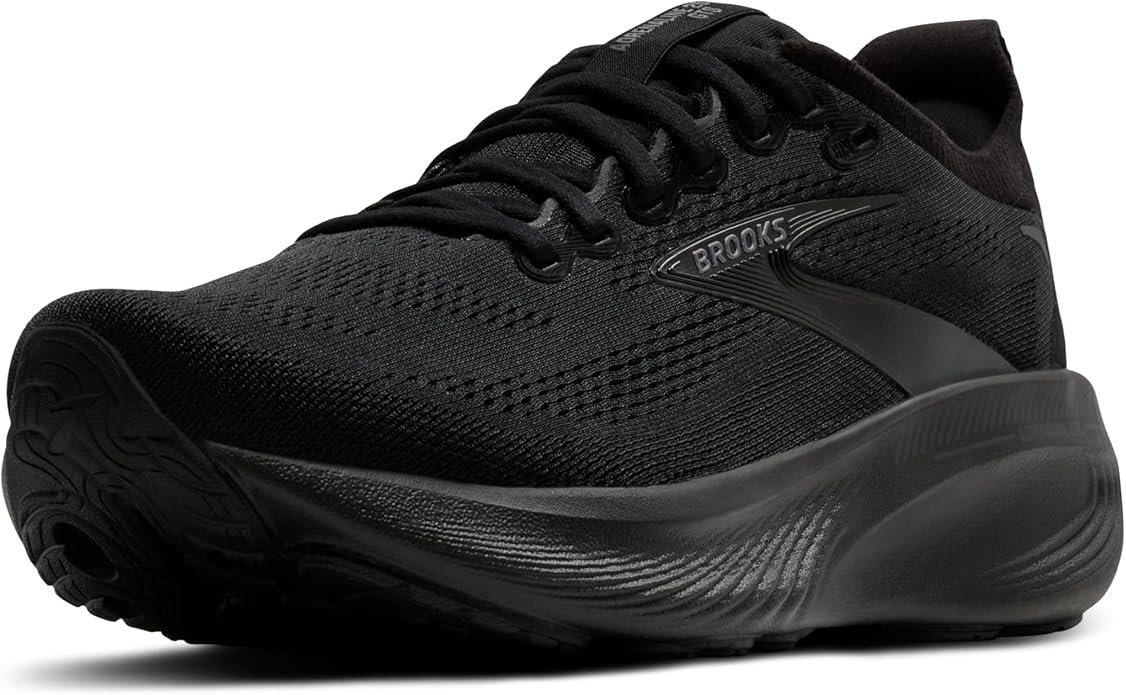 | Brooks Adrenaline GTS 25 (D, 2E, 4E) | Midsole GuideRails: Smart holistic guardrails keep your stride within its natural motion path. | Reducing Shear Forces Across the Forefoot | Check Price |
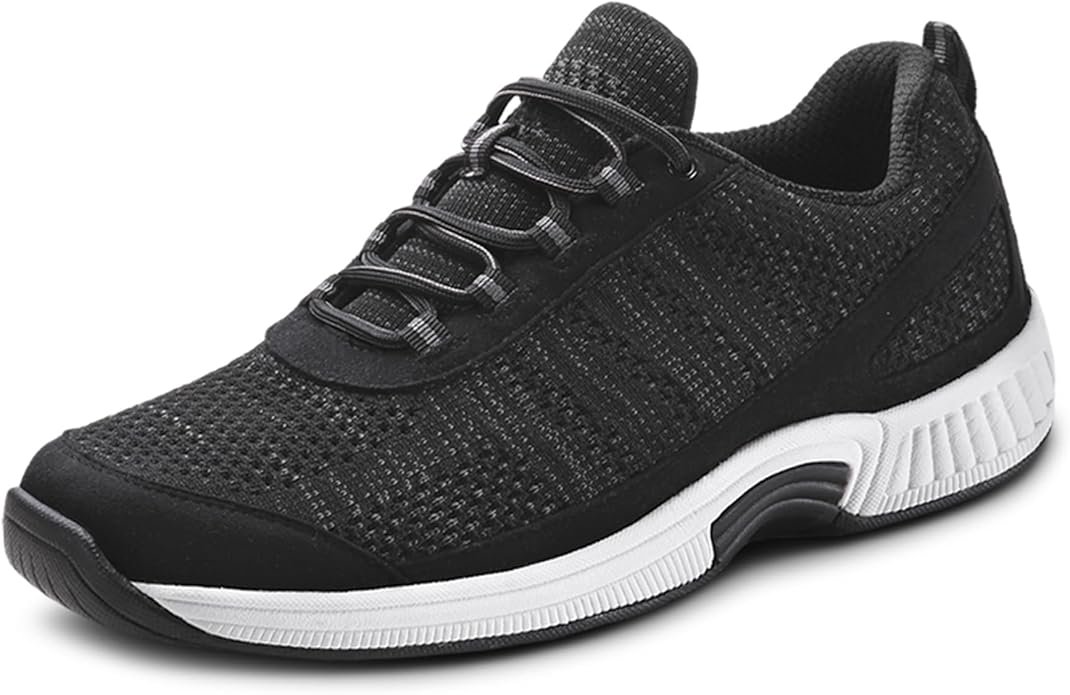 | Orthofeet Edgewater (2E, 4E, 6E) | Extra Vertical Depth Last: Extra overhead clearance explicitly built to accommodate thick medical inserts. | Rigid Carbon Fiber Inserts & Custom Orthotics | Check Price |
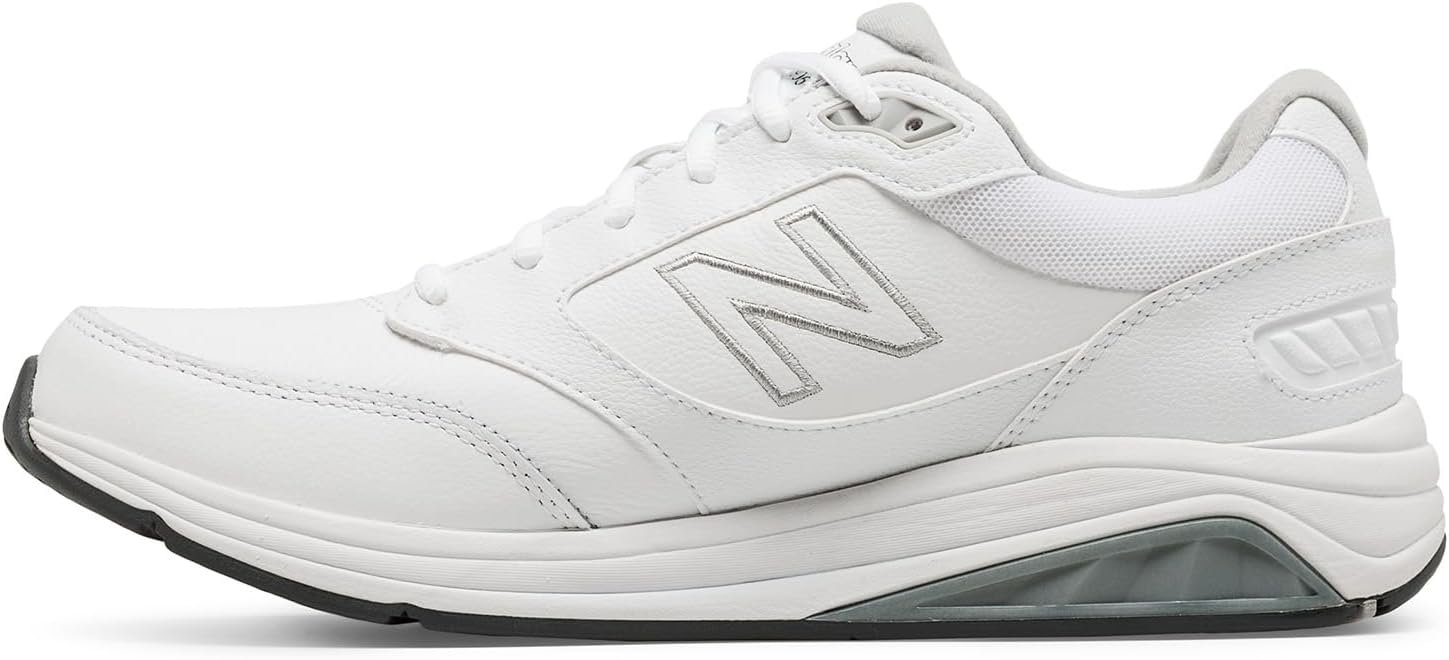 | New Balance 928v3 (2E, 4E, 6E) | ROLLBAR Stability Post: Extreme motion-control chassis paired with a highly rigid forefoot platform. | Advanced Stage 3-4 Arthritis & Post-Surgery | Check Price |
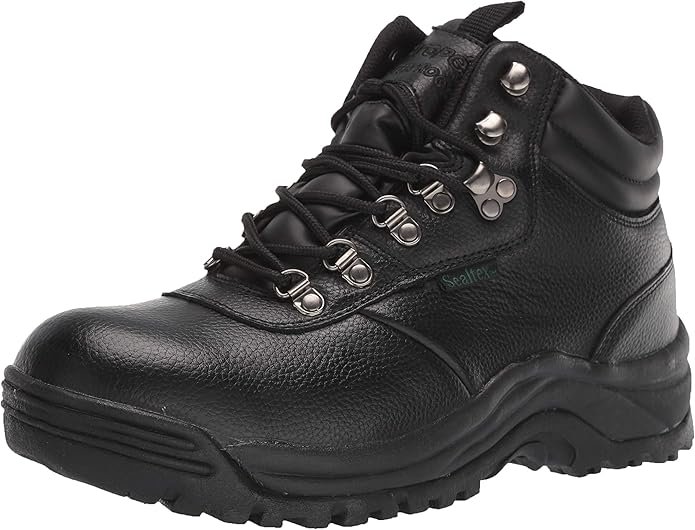 | Propet LifeWalker Strap (Up to 10E) | Dual Strap Adjustment: Flexible top volume accommodates fluctuating swelling. | Severe Inflammatory Edema & Wide Sizing | Check Price |
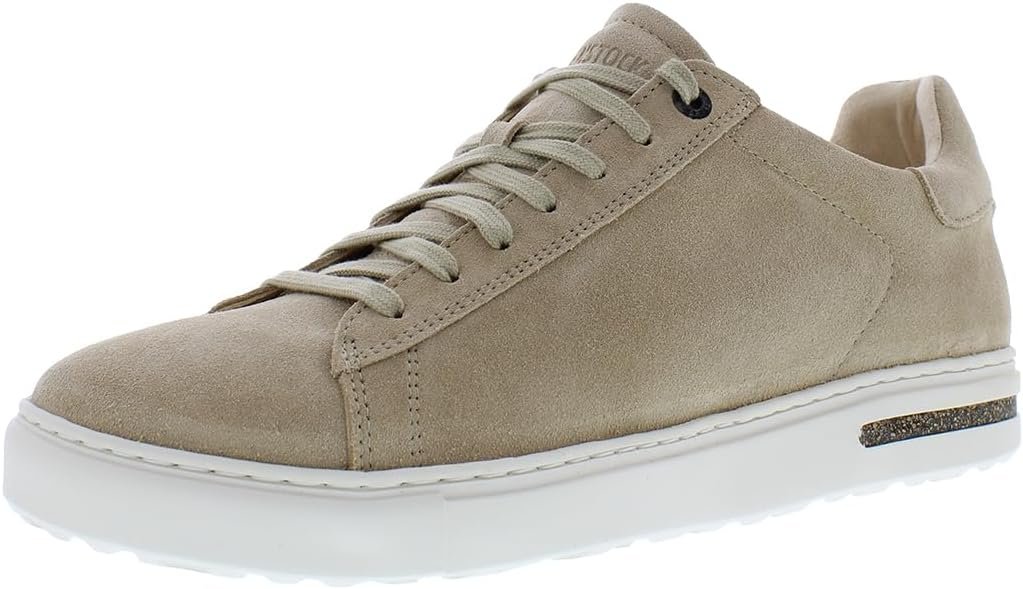 | Birkenstock Bend Low (Regular/Wide) | Rigid Cork-Latex Footbed: Acts as a natural structural splint to completely eliminate toe flex. | Casual Outings & Smart-Professional Dress | Check Price |
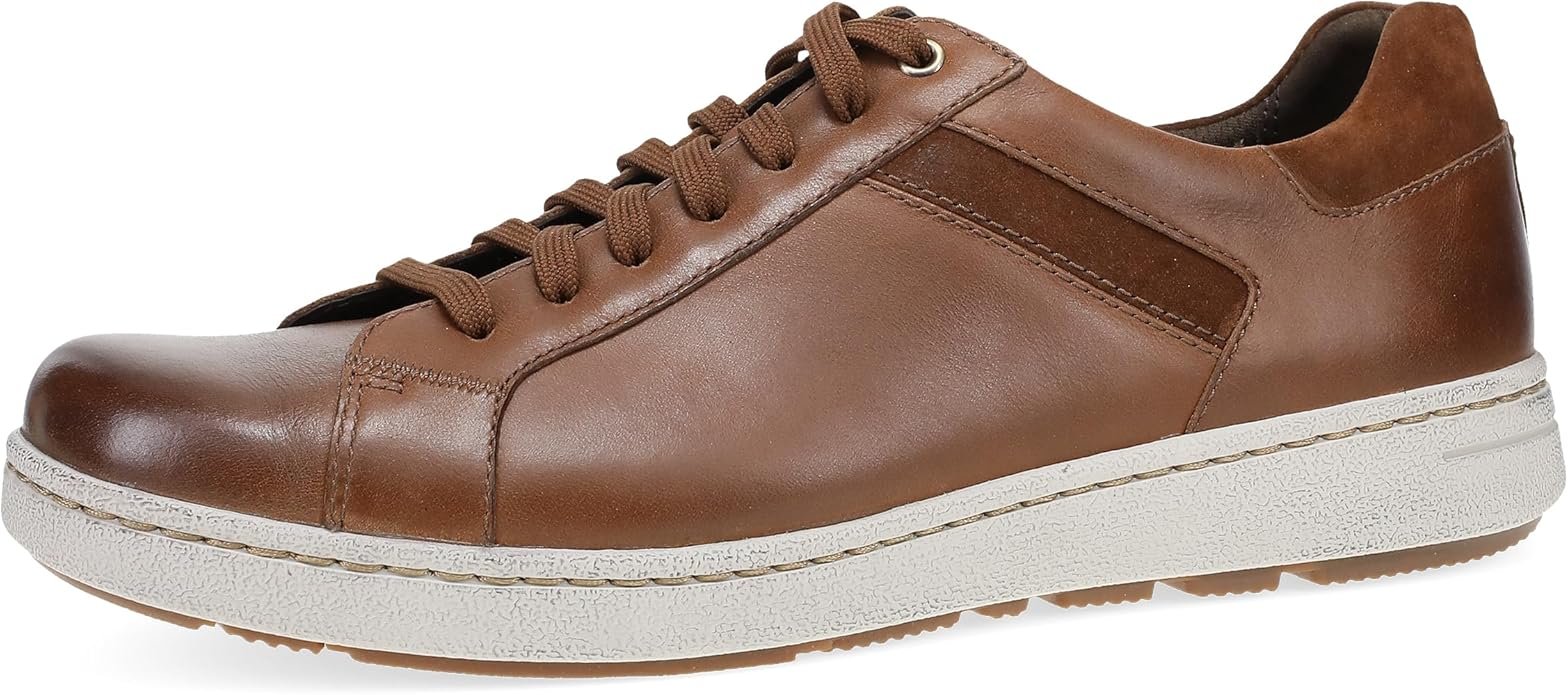 | Dansko Professional (Medium/Wide) | Structural Rocker Bottom: Heavy-duty, rigid outsole completely eliminates MTP strain. | All-Day Standing Workplaces (Nurses/Chefs) | Check Price |
Category 1: High-Volume Athletic Rockers (Standard & 2E)
These shoes are the clinical gold standard. They offload the joint during active walking or running.
1. Hoka Bondi 9 (The Maximum Offloader)
The Hoka Bondi 9 remains the benchmark for 2026. It features a signature Full Meta-Rocker geometry. This design rolls the foot forward during your stride. It reduces the need for the big toe to bend by over 50%.
- The Design: A 33mm stack height of plush foam absorbs “joint-rattling” impact.
- Commercial Note: The “Wide” (2E) version offers a broader platform for better stability.
2. Brooks Ghost Max 3 (The High-Volume Daily Trainer)
The Ghost Max 3 is a 2026 standout for those with sensitive bone spurs. Its engineered mesh upper is designed to stretch. It “floats” over the joint rather than pressing down on it.
- The Design: A high-volume linear last provides significant midfoot room. It uses a thick, stiff rocker that is lighter than most orthopedic models.
- Best For: Users who want a rocker sole without a “clunky” aesthetic.
3. Altra FWD VIA 2 (The Anatomical Choice)
Altra is famous for its FootShape toe box. In the FWD VIA 2, this design allows the big toe to sit straight. It prevents the joint from being pushed toward the other toes.
- The Design: It combines a 4mm heel-to-toe drop with an aggressive late-stage rocker. This helps propel the foot forward without requiring MTP dorsiflexion.
- Best For: Users with a broad forefoot and mild (Grade 1) joint stiffness.
The “Weight-Bearing” Measurement Protocol
A common mistake in 2026 is measuring your feet while sitting. You must measure for width while standing.
When you stand, your foot spreads under your body weight. For a Hallux Rigidus patient, this spread forces the joint against the shoe wall. Always measure your feet in the late afternoon. This accounts for the “Afternoon Swell” typical of inflammatory joint conditions. Finding your true weight-bearing width is the first step toward permanent pain relief.
Category 2: Stability Specialists for Overpronators (2E to 4E)
These shoes target patients whose arches collapse inward. This “rolling” motion increases the pressure on the big toe joint during grinding.
4. New Balance Fresh Foam X 860v14 (The Medial Stability Standard)
The 860v14 is a 2026 favorite for its “Stability Plane” technology. This dual-density system prevents the foot from collapsing inward onto the painful 1st MTP joint. It aligns the foot to ensure weight is distributed evenly across the forefoot.
- The Design: A supportive medial post paired with a high-volume midfoot.
- Commercial Note: This model is a leader in inclusive sizing, available in true 4E (Extra-Wide).
5. ASICS Gel-Kayano 31/32 (The Adaptive Support Trainer)
The Gel-Kayano uses a “4D Guidance System” to provide stability only when you need it. By maintaining a neutral ankle position, it prevents the big toe from twisting during the “push-off” phase.
- The Design: It combines signature GEL cushioning with a wider, more stable platform base.
- Best For: High-mileage walkers who require a blend of joint protection and arch control.
- View on Amazon: ASICS Gel-Kayano Wide
6. Brooks Adrenaline GTS 25 (The Reliable Daily Stabilizer)
The Adrenaline GTS utilizes “GuideRails” to support the foot’s natural motion path. It acts like a bumper on a bowling alley, keeping your foot aligned and reducing shear forces on the big toe.
- The Design: Features nitrogen-infused DNA LOFT v3 foam for a lighter, more responsive feel.
- Widths: Available in Medium (B/D), Wide (D/2E), and Extra-Wide (2E/4E).
Category 3: Extra-Depth & Therapeutic Specialists (4E to 10E)
This category is for advanced Stage 3-4 patients, those with significant edema, or users of custom medical inserts.
7. Orthofeet Edgewater (The Orthopedic Extra-Depth Solution)
The Edgewater is a 2026 leader in therapeutic volume. It is engineered with “extra-depth” to provide the vertical height needed to clear large dorsal bone spurs.
- The Design: Includes a premium orthotic insole and a wide, anatomical toe box.
- Best For: Users who must fit a Morton’s Extension or a 3mm carbon fiber plate.
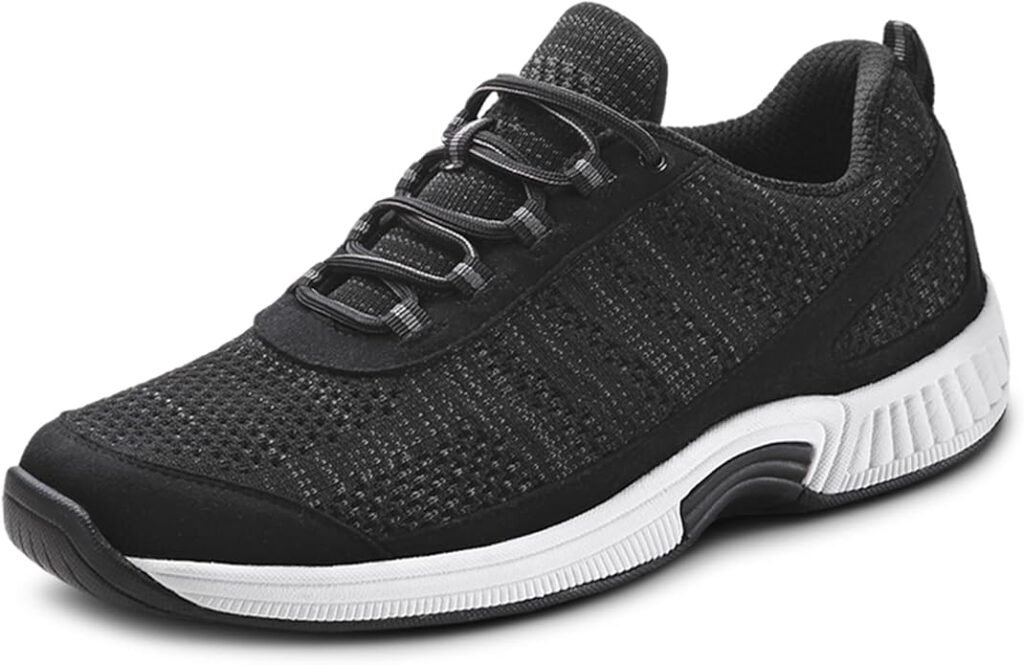
8. New Balance 928v3 (The Rigid Motion Controller)
The 928v3 is built for total stability. Its “ROLLBAR” post prevents torsional twisting that can aggravate an arthritic toe. The forefoot is significantly stiffer than standard sneakers.
- The Design: A deep, stable walking shoe that accommodates complex custom orthotics with ease.
- Commercial Note: This is a rare athletic model available in 6E (XX-Wide).
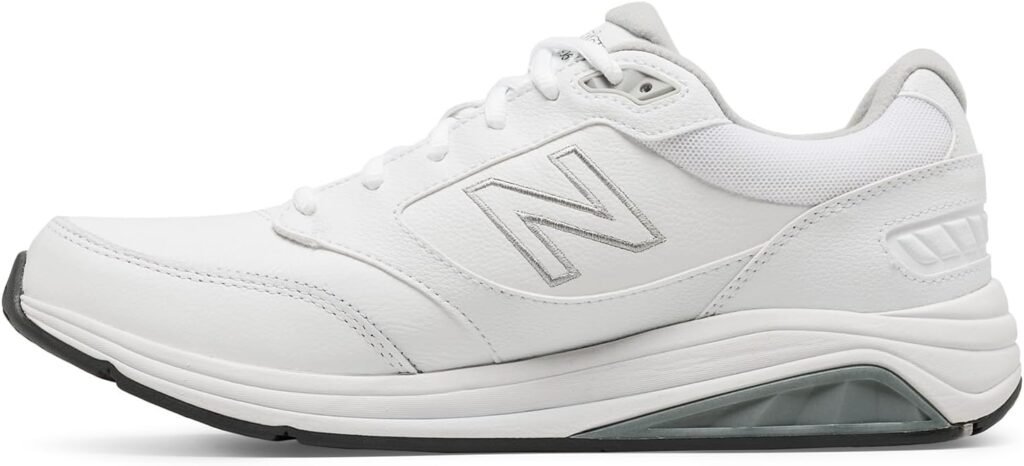
9. Propet LifeWalker Strap (The Extreme Volume Specialist)
For severe inflammatory swelling or post-surgical recovery, the LifeWalker is a staple in 2026. The dual-strap closure allows for fit adjustments throughout the day as your foot volume changes.
- The Design: Features a genuine rocker sole that removes the “grind” from the walking cycle.
- Widths: This model is a specialized provider of widths up to 10E.
The “Limp Compensation Loop”: Why Proper Width Saves Your Hips
When your shoe is too narrow, your brain instinctively changes your gait to avoid big toe pain. You may start “rolling” to the outside of your foot or shortening your stride. This is known as the Limp Compensation Loop.
By 2026, researchers have linked this altered gait to secondary injuries in the knees, hips, and lower back. Choosing a wide-width shoe allows your foot to sit flat and stable. It breaks the cycle of compensation and protects your entire kinetic chain.
Category 4: Lifestyle & Professional Wide-Fits
You shouldn’t have to choose between clinical support and professional aesthetics. These 2026 picks bridge the gap between “medical grade” and “style-focused.”
10. Birkenstock Bend Low (The Rigid-Sole Casual Sneaker)
The Bend Low is a rare find in the casual market. It features a completely rigid cork-latex footbed. This base acts as a natural splint for the big toe, preventing painful upward bending during casual walks.
- The Design: A “foot-shaped” toe box that provides natural splay for wide feet. It is built to be stiffer than standard fashion sneakers.
- Best For: Casual outings where you need the support of a surgical shoe in a low-profile design.
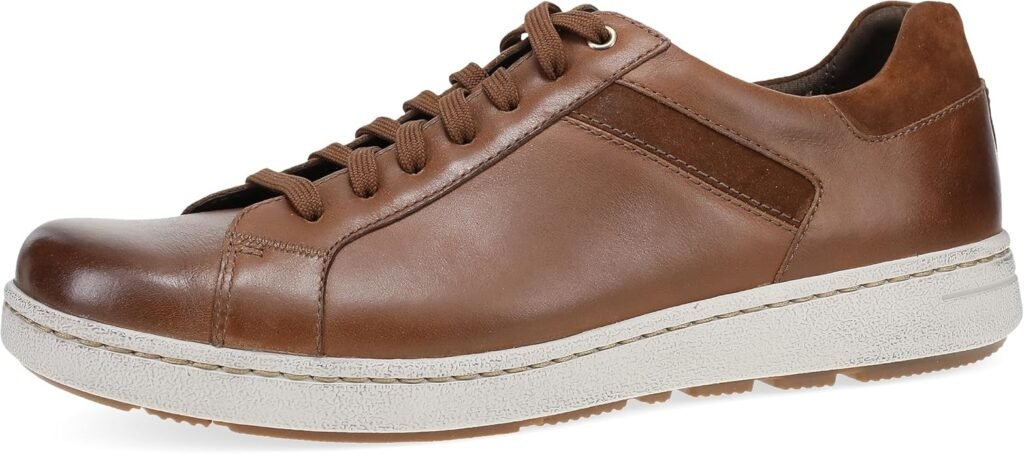
11. Dansko Professional Clog (The High-Volume Workhorse)
The Dansko Clog is a staple for professionals who stand on hard floors all day. Its signature rocker bottom removes almost all motion requirements from the MTP joint. The reinforced toe box offers protection from external impact.
- The Design: A high-volume instep and wide-fitting heel that prevents constriction.
- Best For: Doctors, nurses, and chefs with chronic big toe stiffness.
The “Afternoon Swell” Factor: Why 4:00 PM is Your Best Fitting Time
Hallux Rigidus is an inflammatory condition. This means your joint volume changes throughout the day. By late afternoon, gravity and movement cause blood and fluid to pool in the forefoot.
If you measure your feet at 9:00 AM, you may buy a shoe that becomes a “torture device” by sunset. Always test your new wide-width shoes at the end of your workday. If the shoe feels “snug” at 4:00 PM, it is too small. You should have a full thumb’s width of space at the front and zero lateral pressure on the bone spur.
Buying Guide: Key Metrics for 2026 Footwear
Technical Feature | Clinical Requirement for Hallux Rigidus |
Forefoot Stiffness | Should resist more than 15N of bending force. |
Vertical Depth | Minimum 28mm clearance to avoid bone spur friction. |
Rocker Apex | Early-starting rocker preferred for Grade 3-4 cases. |
Heel-to-Toe Drop | Lower drops (4mm-8mm) typically reduce forefoot loading. |
Final Verdict: Which Wide Shoe is Right for You?
Selecting the correct footwear depends entirely on the Grade of your Hallux Rigidus:
- For Grade 1 (Mild Stiffness): The Brooks Ghost Max 3 offers the perfect blend of a gentle rocker and a forgiving wide upper.
- For Grade 2-3 (Significant Bone Spurs): The Hoka Bondi 9 (Wide) provides the aggressive rocker geometry needed to bypass the joint entirely.
- For Grade 4 or Post-Surgery: The Orthofeet Edgewater or Propet LifeWalker provides the extreme depth (4E-10E) required for medical-grade relief.
Properly fitted wide-width shoes are the most effective non-surgical tool you have. By providing the joint with the “breathing room” it deserves, you can stop the progression of arthritis and reclaim your daily mobility.
Clinical Insight Panel: Technical FAQ for Hallux Rigidus Width & Volume
Why does my big toe joint hurt more in standard “wide” shoes?
Standard wide shoes often focus only on horizontal (“East-West”) space while ignoring vertical depth. If the upper material presses down on a dorsal bone spur (osteophyte), it triggers nerve irritation and localized inflammation. For 2026, clinical standards recommend a minimum of 28mm of vertical clearance in the toe box to ensure total joint decompression.
Can I use carbon fiber inserts in my existing wide shoes?
This is only possible if the shoe has a removable insole and high internal volume. Adding a 3mm carbon fiber plate effectively “shrinks” the shoe’s interior space. To maintain comfort, you should typically move up one width code (e.g., from 2E to 4E) when integrating rigid medical inserts to prevent midfoot strangulation.
Does sole stiffness matter more than shoe width?
They are equally critical but serve different mechanical functions. Stiffness prevents the painful “grind” of the joint by limiting movement, while width prevents lateral compression of the forefoot. In 2026, the gold standard for Grade 3 Hallux Rigidus is a 4E width platform paired with a sole that resists bending.
How does proper shoe width prevent secondary hip or back pain?
When a shoe is too narrow, the body enters a Limp Compensation Loop, shifting weight to the outside of the foot to avoid big toe pain. This altered gait creates a “kinetic chain” reaction, leading to referred pain in the knees, hips, and lower back. Choosing a correctly fitted wide-width shoe allows the foot to sit flat, breaking this cycle and protecting your overall mobility.