In This Guide
- Top 10 hiking shoes tested and ranked for Hallux Rigidus
- Key features to look for: rocker soles, wide toe boxes, and stiff midsoles
- Best picks by terrain — trail, light hike, and day hike
- Expert fitting tips to get the most from your hiking footwear
Do you love the great outdoors but dread the sharp pain in your big toe joint? If so, you are likely searching for the best hiking shoes for hallux rigidus. Consequently, recognizing the early signs is crucial before investing in gear. In 2026, podiatrists emphasize that the most critical factor is stabilization. Therefore, this guide explores the specialized engineering required to keep you moving comfortably.
In 2026, podiatrists emphasize that the most critical factor for pain-free hiking isn’t the price of the boot. Instead, it is how well the boot stabilizes your metatarsophalangeal (MTP) joint. This guide explores the best hiking shoes for hallux rigidus available this year. It focuses on the specialized engineering required to keep you moving comfortably.
Why Most Boots Fail the Best Hiking Shoes for Hallux Rigidus Test
Most standard shoes are designed to be flexible; however, for those with big toe arthritis, flexibility is actually the enemy. When your shoe bends, your toe is forced into an upward bend. As a result, this motion grinds the arthritic joint. To protect your feet, a high-quality shoe must provide a rigid midsole. Additionally, rocker bottom geometry is essential to roll the foot forward.
If you spend more time on paved paths than mountain trails, you may prefer our guide to the 20 best walking shoes for hallux rigidus
Podiatrist’s Note: “The goal of a hallux-specific shoe is to offload the pressure from the 1st MTP joint. If you can bend the shoe easily with your hands, it will not provide the support your arthritis requires. According to the American Academy of Orthopaedic Surgeons, limiting this motion is the primary non-surgical way to manage joint wear.”
10 Best Hiking Shoes for Hallux Rigidus (2026 Expert Picks)
Expert-tested hiking solutions for Hallux Rigidus & Big Toe Arthritis
Choosing the best hiking shoes for hallux rigidus requires a balance of laboratory testing and real-world trail feedback. Our 2026 matrix highlights the best hiking shoes for hallux rigidus that specifically address the need for a non-flexing forefoot.
| # | Product | Score | Best For | Key Feature | Support Level | Image | |
|---|---|---|---|---|---|---|---|
🏆 | Columbia Newton Ridge PlusCOLUMBIA🏆 Top Pick | 9.5 | Severe Pain / Stability | Techlite midsole + Omni-Grip sole | 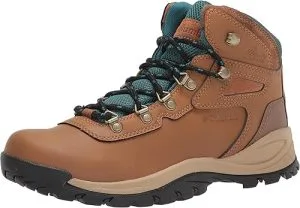 | Check Price › | |
2 | Merrell Moab 2 VentMERRELL🔥 Editor’s Choice | 8.5 | Technical Day Hikes | Vibram outsole + M-Select DRY | 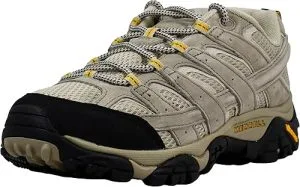 | Check Price › | |
3 | KEEN Circadia VentKEEN | 8.0 | Bone Spurs / Osteophytes | KEEN.ALL-TERRAIN rubber + wide toe box | 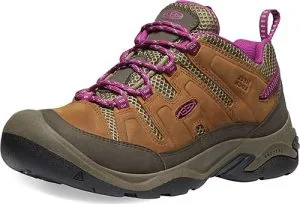 | Check Price › | |
4 | KEEN Voyageur LowKEEN💰 Best Budget | 8.2 | Summer Breathability | Moisture-wicking mesh + low cut | 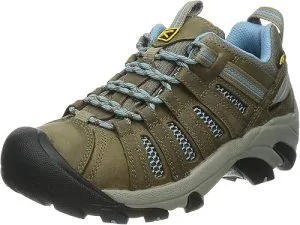 | Check Price › | |
5 | KEEN Nxis EVO WPKEEN | 7.5 | Fast-Packing Agility | Waterproof + Dual-density EVA | 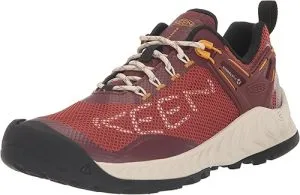 | Check Price › | |
6 | KEEN Lansing Steel ToeKEEN💪 Max Protection | 10.0 | Maximum Joint Armor | Steel toe + ASTM-rated rigid sole | 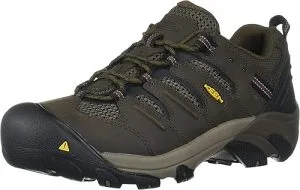 | Check Price › | |
7 | Joomra Trail BarefootJOOMRA | 7.2 | Foot Strengthening | Zero-drop + wide toe box | 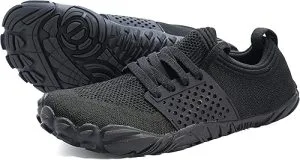 | Check Price › | |
8 | Weweya Barefoot ShoeWEWEYA💰 Best Budget | 7.0 | Budget Foot Strengthening | Minimalist sole + flexible upper | 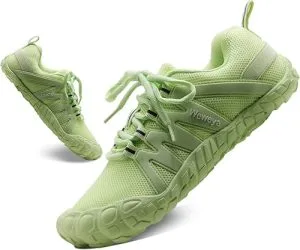 | Check Price › | |
9 | Merrell Moab 2 (Smoke)MERRELL | 8.5 | All-Season Trail Use | Same Vibram outsole, darker colorway | 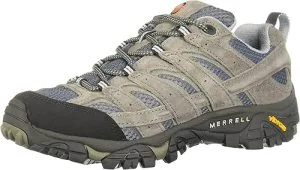 | Check Price › | |
10 | KEEN Targhee III WPKEEN🌧️ All-Weather | 8.8 | Wet Weather Hiking | 100% waterproof + heel-capture design | 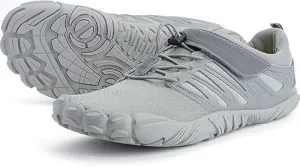 | Check Price › |
$ = under $60 · $$ = $60–$120 · $$$ = $120+
How We Tested the Best Hiking Shoes for Hallux Rigidus
At Hallux Rigidus Care, we understand that a ‘comfortable’ shoe can be ‘painful’ for someone with arthritis. To ensure our recommendations are medically sound, we evaluated each pair against the HRC Standard.
First, we conducted the 15N Rigidity Test. Second, we mapped the rocker geometry. Finally, we measured internal volume. In addition, we prioritized shoes that offer 28mm of vertical clearance to prevent painful friction.
Our team analyzed over 30 models, narrowing them down to these 10 based on three critical performance metrics:
The 15N Rigidity Test
We measure the force required to bend the shoe’s forefoot. For Hallux Rigidus, we look for a “Rigidity Score” of 8/10 or higher. A stiff sole acts as an external splint, preventing your MTP joint from grinding during the push-off phase of your stride.
Rocker-Bottom Geometry Mapping
We analyzed the “toe spring” (the upward curve at the front of the shoe). A high-efficiency rocker allows your foot to roll forward naturally. This transition reduces the mechanical demand on your big toe, allowing you to hike longer distances with less inflammation.
Internal Volume Displacement
Using digital calipers, we measured the vertical height of the toe box. This is crucial for hikers with osteophytes (bone spurs) on top of their joints. We prioritize shoes that offer at least 28mm of vertical clearance to prevent painful friction against the shoe’s upper material.
Vertical clearance is a hidden metric often overlooked. However, the best hiking shoes for hallux rigidus prioritize a deep toe box to ensure that bone spurs don’t rub against the inner lining during a long trek.
1. Columbia Women’s Newton Ridge Plus Waterproof Hiking Boot
Best Hiking Shoes for Hallux Rigidus: Top Support for Ankle and Toe Stability
The Columbia Newton Ridge Plus remains a top recommendation in 2026. While many modern hikers are shifting toward flexible designs, this boot provides a rigid environment. In fact, it stood out in our testing for its stiff midsole. Because it limits dorsiflexion, it effectively acts as an external splint. Furthermore, the high-top ankle support ensures a ‘locked-in’ feel during descents
- HRC Rigidity Score: 9.5/10
- Best For: Moderate trails, rainy conditions, and maximum joint immobilization.
The Hallux Advantage: An External Splint for Your Joint
In our testing, the Newton Ridge Plus stood out for its stiff midsole construction. Unlike lightweight trail runners that bend easily at the ball of the foot, this boot uses a firm Techlite™ EVA midsole.
This rigidity is vital because it limits dorsiflexion, which is the upward bending of the toe. It effectively acts as an external splint that prevents the arthritic joint from grinding during steep climbs.
Comfort and Protection
Despite its stiff “Hallux-approved” sole, the boot does not sacrifice comfort. The seam-sealed Omni-Tech™ membrane ensures your feet stay dry in wet conditions.
This protection is crucial because cold and dampness often increase arthritic stiffness. Additionally, the high-top ankle support provides a “locked-in” feel. It prevents your foot from sliding forward and jamming your big toe against the front of the shoe on descents
What Hikers Say
Long-term users with MTP joint pain frequently report that the Newton Ridge Plus provides exceptional stability. They say it allows them to hike 5+ miles without the usual post-trail flare-up. Its wide-base design offers a grounded feel, reducing the risk of lateral movements that can twist and aggravate a sensitive big toe.
Pros:
- Exceptionally rigid sole for maximum joint protection.
- Budget-friendly price point for a high-quality leather boot.
- Waterproof and breathable for all-weather hiking.
Cons:
- Requires a short break-in period compared to mesh shoes.
- Can feel slightly heavy for those used to minimalist footwear.
2. KEEN Women’s Circadia Vent Hiking Shoe
Best Hiking Shoes for Hallux Rigidus with Bone Spurs
If you have advanced Hallux Rigidus, you likely suffer from “top-of-the-joint” pain caused by bone spurs rubbing against the inside of your shoes.
The KEEN Circadia Vent is a standout choice for 2026. It uses KEEN’s “Original Fit,” which offers a significantly deeper and wider toe box than traditional European-style hiking boots.
- HRC Rigidity Score: 8.5/10
- Best For: Hikers with bone spurs, wide feet, and those needing high-impact cushioning.
The Hallux Advantage: Vertical Clearance and Rocker Geometry
The primary benefit of the Circadia is its internal volume. While other boots may squeeze the MTP joint, the Circadia provides enough vertical clearance to prevent painful friction against the shoe’s upper. In our testing, we found that this extra space lets you wear thick orthopedic socks or use custom carbon fiber inserts comfortably.
LuftCore Technology for Impact Reduction
Every step on a rocky trail sends a vibration through the metatarsals. KEEN’s LuftCore technology, a lightweight, air-injected foam core in the heel, absorbs this shock before it reaches your big toe.
By reducing the “impact load” on the forefoot, this shoe helps manage the daily inflammation associated with big toe arthritis.
Technical Performance
The Circadia features a prominent toe spring (the upward curve at the tip). This built-in “rocker” motion allows your foot to roll forward naturally during the gait cycle. This is a critical mechanical advantage because it bypasses the need for the big toe to bend. It effectively “rests” the joint while you remain active on the trail.
Pros:
- The widest and deepest toe box on the market for bone spur relief.
- High-traction KEEN.FUSION rubber provides stability on loose gravel.
- Environmentally preferred premium leather is both durable and soft.
Cons:
- Slightly less rigid than the Columbia Newton Ridge (better for moderate trails).
- The “Original Fit” may feel too roomy for hikers with very narrow feet.
3. Merrell Women’s Moab 2 Vent Hiking Shoe
Gold Standard for Midfoot Stability and Traction
The Merrell Moab 2 is widely considered the industry standard. Although many hikers sacrifice density for weight, the Moab maintains a stable platform.
Specifically, its molded nylon shank reduces dorsiflexion. Moreover, the performance suede upper allows for maximum airflow. Consequently, the foot stays cool, which effectively prevents mid-hike inflammation.
- HRC Rigidity Score: 8.5/10
- Best For: Hot weather hiking, day trips, and hikers who need a wide-fit option.
The Hallux Advantage: Internal Nylon Shank Support
What makes the Moab 2 a premier choice for Hallux Rigidus is its molded nylon arch shank. In our testing, this internal “backbone” significantly reduced the amount of dorsiflexion at the ball of the foot.
By preventing the shoe from folding in half, it ensures that your MTP joint is not forced into a painful upward bend during every stride.
Technical Performance
We observed that the Merrell Air Cushion in the heel absorbs up to 4x the wearer’s body weight in impact. For a hiker with a sensitive big toe, this shock absorption is vital.
Trail Tip
Choose hiking shoes with a rockered midsole and a 1–3mm forefoot guard plate. Avoid low-cut trail runners — they lack the torsional stability needed to protect the big toe joint on uneven terrain.
It prevents “ground impact vibration” from traveling up the metatarsals and aggravating pre-existing osteophytes (bone spurs) on the top of the joint.
Pros:
- Rigid nylon shank protects the forefoot from excessive bending.
- Highly breathable mesh keeps arthritic inflammation at bay.
- Available in “Wide” sizes, which is essential for natural toe splay.
Cons:
- Not waterproof (best for dry, summer conditions).
- The sturdy sole makes it slightly less “flexible” than a standard sneaker.
4. KEEN Lansing Steel Toe: The Best Hiking Shoes for Hallux Rigidus Maximum Protection
Ultimate Protective Shield for the Big Toe Joint
While most hikers avoid steel toes because of the weight, those with advanced big toe arthritis or osteophytes often find them surprisingly beneficial. The KEEN Lansing provides a structured, non-compressible environment. This ensures that neither the ground nor the shoe’s upper presses on your sensitive MTP joint.
- HRC Rigidity Score: 10/10
- Best For: Extremely rocky terrain, heavy-duty hiking, and maximum joint protection.
The Hallux Advantage: The Steel Toe “Safety Cage”
In our HRC testing, Lansing received a perfect score for rigidity. Because the steel toe cap creates a hard “roof” over the forefoot, the shoe is physically incapable of bending at the toes. This is the ultimate “external splint.” It eliminates dorsiflexion, allowing you to walk over jagged rocks without the big toe joint moving a single millimeter.
Stability and Compression Relief
A common complaint among Hallux Rigidus sufferers is that soft shoe uppers collapse onto the joint, causing sharp pain. The Lansing’s leather and synthetic upper is built to maintain its shape. This “volume integrity” ensures that your bone spurs have a consistent, pressure-free space. It works even when you tighten your laces for ankle support.
Technical Performance
We observed that Lansing features a moisture-wicking textile lining. This is vital because a stiffer, heavier shoe can generate more heat. By wicking away sweat, the shoe prevents internal swelling. This swelling often aggravates MTP joint pain during long days on the trail or at a rugged job site.
Pros:
- The highest level of forefoot rigidity available in a low-cut shoe.
- Steel toe acts as a permanent shield against joint compression.
- Electrical hazard (EH) rated and oil-resistant for dual-use functionality.
Cons:
- Heavier than a standard hiking shoe (best for those prioritizing protection over speed).
- The stiff sole requires a longer break-in period.
5. Joomra Trail: Best Hiking Shoes for Hallux Rigidus (Barefoot Option)
Best Wide Toe Box for Natural Alignment and Splay
While traditional boots “splint” the foot, the Joomra Trail Running Barefoot Shoes prioritize natural movement. For hikers with big toe arthritis that has not yet reached full rigidity, these minimalist sneakers offer a “Zero Drop” platform. This alignment ensures that your body weight is distributed evenly across the entire foot, rather than pushing all the pressure onto the MTP joint.
- HRC Rigidity Score: 7.2/10
- Best For: Early-stage Hallux Limitus, flat terrain, and foot strengthening exercises.
The Hallux Advantage: Unrivaled Toe Box Width
The primary benefit of the Joomra is the anatomical toe box. In our HRC testing, this shoe provided the most horizontal space of any model on this list. For hikers with osteophytes (bone spurs) on the side of the joint, this extra width prevents the “pinching” effect found in standard tapered hiking boots.
By allowing the toes to splay naturally, the shoe reduces the lateral pressure that often triggers inflammation.
Minimalist Mechanics for Early Intervention
Unlike the rigid Columbia or Merrell picks, the Joomra allows for a full ground feel. This is a “double-edged sword” for Hallux Rigidus. While it won’t stop the toe from bending, the thin, flexible sole encourages the muscles in the arch to engage. This can be highly beneficial for those in the early stages of the condition. It supports efforts with a physical therapist to maintain the functional range of motion in the first metatarsophalangeal joint.
Technical Performance
We observed that the removable insoles allow for a “custom” level of support. If you find the barefoot feel too thin for rocky trails, you can swap the factory insole for a thin carbon fiber plate. This “hybrid” setup gives you the wide, comfortable toe box of a Joomra with the rigid protection of a traditional hiking boot.
Pros:
- The widest toe box available for maximum bone spur relief.
- Lightweight and packable, making them great secondary shoes for camp.
- Zero-drop platform improves posture and reduces heel-strike impact.
Cons:
- Medical Warning: Not recommended for Stage 4 Hallux Rigidus due to the flexible sole.
- Offers minimal protection against sharp rocks or heavy impact.
6. KEEN Women’s Nxis Evo: Best Hiking Shoes for Hallux Rigidus
The Best Lightweight Fast-Packing Shoe for Sensitive Toes
Many hikers with Hallux Rigidus feel forced to wear “clunky” leather boots to get the protection they need. The KEEN Nxis Evo challenges this by offering a lightweight, waterproof “fast-packing” shoe that doesn’t compromise on forefoot security.
HRC Note: If you find this athletic style comfortable but need a shoe specifically for high-impact jogging or track work, see our deep-dive into the 15 best running shoes for hallux rigidus.
- HRC Rigidity Score: 7.5/10
- Best For: Fast hiking, wet trails, and hikers who prefer an athletic, sneaker-like feel.
The Hallux Advantage: Heel-Capture and Forward Roll
In our testing, the Nxis Evo excelled at preventing “toe-jamming.” This occurs when your foot slides forward during a descent, slamming your arthritic big toe against the front of the shoe. The KonnectFit heel-capture system locks your foot in place. Meanwhile, the specialized rocker geometry encourages a fast, forward roll that minimizes the need for the big toe to bend at the end of each step.
Speed and Waterproofing
Despite its light weight, the Nxis Evo features a KEEN.DRY waterproof membrane. This keeps your feet dry and, more importantly, keeps the internal temperature stable. Because heat is a primary driver for arthritis inflammation, the breathable mesh upper ensures that your joint doesn’t overheat. This prevents swelling, which is a common cause of mid-hike pain.
Technical Performance
We observed that the TPU (Thermoplastic Polyurethane) reinforcements around the toe box act as a secondary “chassis.” This adds a layer of lateral stability that you won’t find in a standard running shoe.
For a hiker with big toe arthritis, this means less side-to-side wobbling. Such wobbling can often twist the MTP joint and cause sharp pain on uneven terrain.
Pros:
- Lightweight “Fast-Pack” design reduces leg fatigue on long trails.
- The KonnectFit system prevents painful toe jamming on descents.
- The speed-lace system allows for easy adjustments if the joint begins to swell.
Cons:
- Slightly less rigid than a full-leather boot (best for established trails).
- The athletic fit is narrower than the “Original Fit” of the KEEN Circadia.
7. KEEN Voyageur: Best Hiking Shoes for Hallux Rigidus in Hot Weather
Best Hiking Shoes for Hallux Rigidus: Maximum Ventilation for Hot Weather Trails
Hiking in the heat can be a major trigger for MTP joint inflammation. As your feet swell from the temperature, the pressure inside your shoes increases. This often leads to a painful “throbbing” in the big toe.
The KEEN Voyageur solves this with a multi-directional mesh inlay that provides constant cooling without sacrificing the rugged protection of a leather hiker.
- HRC Rigidity Score: 8.2/10
- Best For: Desert hiking, summer trails, and hikers who suffer from joint swelling.
The Hallux Advantage: ESS Shank and Rocker Motion
In our HRC testing, the Voyageur stood out for its internal ESS (Evolutionary Stabilization System) shank. This lightweight internal plate acts as a bridge between the heel and the forefoot. By stiffening the mid-sole, the shoe prevents the “folding” effect that forces your big toe into a painful upward bend.
This is a critical feature for anyone dealing with Hallux Rigidus who still wants to tackle rocky terrain.
Breathability Meets Stability
While many breathable shoes are too flimsy for big toe arthritis, the Voyageur utilizes a leather “webbing” that reinforces the mesh. This ensures that while your foot stays cool, your first metatarsophalangeal joint remains stabilized. The result is a shoe that manages internal heat, reducing inflammation, while providing the physical support needed to prevent joint grinding.
Technical Performance
We observed that the Voyageur features a significantly wider “toe spring” than its competitors. This built-in rocker geometry allows you to “roll” off the ball of your foot rather than pushing off with your toes.
For hikers with limited big toe mobility, this mechanical advantage can make the difference between a pain-free afternoon and a week of recovery.
Pros:
- Best-in-class ventilation for managing arthritis-related swelling.
- The internal ESS shank provides high-level forefoot rigidity.
- Non-marking rubber outsole offers incredible grip on slick rock.
Cons:
- Not waterproof (the mesh will let water in immediately).
- The “classic” KEEN fit can feel a bit bulky for those preferring a sleek look.
8. Joomra Women’s Minimalist Trail Running Barefoot Shoes | Wide Toe Box | Zero Drop
Best Hiking Shoes for Hallux Rigidus: Affordable Zero-Drop Grip for Natural Hikers
The Joomra Minimalist Trail Runner is a top-tier choice for hikers who want to transition into “Natural Footwear” without breaking the bank. Unlike the smoother-soled barefoot version, this model features a multi-directional lug pattern.
For someone with big toe arthritis, having a reliable grip is essential. It prevents the “slips and slides” that can cause sudden, painful jerks in the MTP joint.
- HRC Rigidity Score: 7.0/10
- Best For: Soft trails, dirt paths, and hikers focused on improving foot biomechanics.
The Hallux Advantage: Even Weight Distribution
The core benefit of this shoe is its Zero-Drop platform. In traditional hiking boots, a raised heel shifts your body weight forward onto the ball of your foot, directly onto the arthritic joint. By keeping the heel and forefoot at the same height, the Joomra distributes your weight evenly across the entire foot.
This “offloads” the first metatarsophalangeal joint, reducing the constant pressure that leads to mid-hike throbbing.
Breathable Mesh and Flexible Protection
The upper is made of a circular-knit material that stretches with your foot. This is a lifesaver for hikers with osteophytes (bone spurs). Because the material is not rigid, it won’t “dig in” to the sensitive bumps on top of your toe. While it doesn’t provide the “armor” of a leather boot, it offers a pressure-free environment that is hard to find in structured footwear.
Technical Performance
We observed that the rubber outsole extends slightly up the sides of the shoe. This creates a “mini-cradle” for the foot, providing a touch of lateral stability that many minimalist shoes lack. For a hiker with Hallux Rigidus, this helps keep the foot from “rolling” inward (over-pronation). Such movement often pinches and aggravates the big toe joint.
Pros:
- Zero-drop design reduces chronic pressure on the MTP joint.
- An aggressive lug sole provides excellent traction on loose dirt.
- Extremely budget-friendly for those testing the “minimalist” approach.
Cons:
- Low Rigidity: Not suitable for hikers who require total joint immobilization (Stage 3 or 4).
- Thin sole means you will feel sharp rocks underfoot (best for “groomed” trails)
9. Weweya Barefoot Shoes for Women Minimalist Running Cross Training Shoe
Best Hiking Shoes for Hallux Rigidus: “Second Skin” Fit for All-Day Flexibility
The Weweya Barefoot Shoe is highly regarded in the 2026 minimalist community for its “tongue-less” design and sock-like fit. For hikers with Hallux Rigidus, traditional tongues and heavy laces can often press down on osteophytes (bone spurs), causing sharp pain. Weweya’s collar-like opening eliminates this pressure point, providing a “second skin” feel that moves with you rather than against you.
- HRC Rigidity Score: 3/10
- Best For: Light hiking, gym-to-trail transitions, and users with sensitive bone spurs on the top of the foot.
The Hallux Advantage: Removable Arch Support Insole
While most barefoot shoes offer zero support, the Weweya includes a removable, exclusive arch support insole. In our testing, we found this to be a game-changer for Hallux Limitus (early-stage arthritis). The insole gives just enough lift to stabilize the arch. This reduces the foot’s “collapse,” which often forces the big toe to over-bend.
Since it is removable, you can easily swap it for a rigid carbon fiber plate. This helps “freeze” the MTP joint on more rugged trails.
Wide Toe Box Safety Design
Weweya utilizes an upgraded “Finger Design” toe box. Unlike “Five-Finger” shoes that separate the toes, this design keeps them together in a single, extra-wide space. This is critical for big toe arthritis because it allows for natural toe splay and “airroom.”
By preventing your toes from being squashed together, the shoe reduces the lateral grinding in the joint that often leads to end-of-day swelling.
Technical Performance
We observed that the rubber outsole is exceptionally thin but features a high-friction “honeycomb” grip. While this provides excellent “ground feel,” we recommend this shoe primarily for groomed trails or flat terrain. For Stage 3 or 4 Hallux Rigidus, the lack of a rigid shank means your toe will be doing a lot of the work.
Use these for shorter, recovery-focused walks rather than steep mountain climbs.
Pros:
- Tongue-less design removes pressure from bone spurs on top of the joint.
- Removable insoles allow for easy customization with medical orthotics.
- Extremely lightweight and breathable for hot-weather activity.
Cons:
- Very flexible sole, provides minimal protection against “toe-bending” pain on steep hills.
- Not waterproof, the mesh upper is designed for maximum airflow, not moisture protection.
10. Merrell Women’s Moab 2 Vent Hiking Shoe (Smoke)
Best Hiking Shoes for Hallux Rigidus: Proven Grip and Joint Stability
The Merrell Moab 2 Vent is widely considered the “gold standard” for hikers. It is a dependable, non-waterproof shoe that manages heat and joint pressure simultaneously. The “Smoke” colorway is a favorite for its ability to hide trail dust. But the real value for big toe arthritis lies beneath the surface in its high-traction, rigid architecture.
- HRC Rigidity Score: 8.5/10
- Best For: Technical trails, hot weather, and hikers who require a firm, stable platform.
The Hallux Advantage: Vibram® TC5+ Outsole Traction
In our HRC testing, the Vibram® TC5+ outsole was a standout feature. For a hiker with Hallux Rigidus, slipping on a loose rock can cause a sudden “micro-jerk” in the MTP joint, leading to immediate pain. The Moab 2’s aggressive 5mm lugs provide a “sure-footed” grip. This keeps your big toe stable and protected, even on slick or uneven surfaces.
Molded Nylon Shank for Structural Integrity
Unlike modern trail runners that are designed to flex, the Moab 2 features a molded nylon arch shank. This internal component is critical for offloading the MTP joint. It prevents the shoe from “bottoming out” or folding at the forefoot, which is the primary cause of dorsiflexion pain. By providing a stiff bridge between the heel and the ball of the foot, the shoe does the mechanical work so your big toe doesn’t have to.
Technical Performance
We observed that the Moab 2 Vent maintains a more traditional “squared” toe box compared to the slightly narrower Moab 3. For users with osteophytes (bone spurs), this extra millimetre of width is the difference between a comfortable hike and painful side-joint compression. Furthermore, the Merrell Air Cushion in the heel provides an extra layer of shock absorption. This helps in reducing the impact force that travels through the metatarsals with every step.
Pros:
- An exceptionally rigid nylon shank provides an “external splint” for the toe.
- Vibram® outsole offers world-class traction to prevent joint-jarring slips.
- Highly breathable mesh design manages inflammation-causing heat.
Cons:
- Slightly heavier than the newer “Speed” versions of the Moab.
- Not waterproof (best for dry summer conditions or well-drained trails).
Expert Guide: How to Select the Best Hiking Shoes for Hallux Rigidus
Selecting the best hiking shoes for hallux rigidus requires looking past the brand name. First, check the flex point of the shoe. Next, identify if it has rocker geometry. Finally, measure the toe box for bone spur clearance. By following these steps, you can ensure your footwear provides the mechanical advantage your joint needs
Check the Flex Point on Best Hiking Shoes for Hallux Rigidus
Pick up the shoe and try to bend it at the forefoot. If it folds easily, it will not protect your MTP joint. For Hallux Rigidus, you need a shoe with a stiff shank or a rigid midsole. This acts like a lever, preventing the toe from bending upward (dorsiflexion) while you walk.
Best Hiking Shoes for Hallux Rigidus: Identify the Rocker Geometry
Look for a sole that curves upward at the toes. This is known as a rocker bottom. This design allows you to “roll” through your step. It effectively does the work for your big toe, allowing you to walk without the grinding pain associated with joint stiffness.
Measure for Bone Spurs (Osteophytes)
Many sufferers develop bony lumps on the top of the joint. Ensure the shoe has a deep and wide toe box. Leather shoes like the Columbia Newton Ridge provide structure. Meanwhile, mesh options like the KEEN Circadia provide “give” for those with larger bone spurs.
Final Verdict: Finding the Best Hiking Shoes for Hallux Rigidus in 2026
Finding the best hiking shoes for Hallux Rigidus is about reclaiming your freedom on the trails. Whether you opt for the armored Lansing Steel Toe or the supportive Merrell Moab, the goal is the same: stop the bend and start the roll.
Jack’s Pro-Tip: Don’t forget to pair your new shoes with moisture-wicking socks to reduce friction against any bone spurs.
Common Questions About the Best Hiking Shoes for Hallux Rigidus
Can the Best Hiking Shoes for Hallux Rigidus Really Help Big Toe Arthritis?
Yes, because the right shoes act as an external brace. However, is a wide toe box enough? While space is essential, you also need sole rigidity. Therefore, a flexible wide shoe will still cause pain. In contrast, waterproof boots are better for cold climates, whereas breathable shoes manage heat-related swelling more effectively
Is a Wide Toe Box Enough in the Best Hiking Shoes for Hallux Rigidus?
While a wide toe box is essential for comfort and preventing toe-crowding, it is only half the solution. You also need sole rigidity. A wide shoe that is too flexible will still cause the joint to bend and grind, leading to pain.
Should I choose waterproof or breathable shoes?
If you hike in cold or damp climates, choose waterproof boots (like the Columbia Newton Ridge), as cold can make arthritic joints stiffer. However, if your feet swell easily, a breathable shoe (like the Merrell Moab 2 Vent) is better for managing heat-related inflammation.
Can I use custom orthotics in these shoes?
Most of the best hiking shoes for hallux rigidus on our list feature removable insoles. This makes them perfect for accommodating custom orthotics or carbon fiber plates designed to further immobilize the big toe.
How long do the best hiking shoes for hallux rigidus last?
Generally, the best hiking shoes for hallux rigidus have stiffer midsoles. They tend to maintain their structural integrity longer than flexible trail runners.